
Digital vault vs password manager becomes an important comparison for anyone seeking stronger data protection in a world where cyber threats continue to rise. Many individuals assume both tools function the same way, even though their core purposes differ significantly. Choosing the right solution helps protect sensitive documents, credentials, and personal information more effectively. Incorrect selection may expose users to unnecessary risks that could be avoided with proper planning. Knowledge of the digital vault vs password manager distinction ensures smarter and more secure decision making.
What Makes the Digital Vault vs Password Manager Debate Important
Cybersecurity has evolved quickly, creating new categories of tools for securing personal and business information. Users often compare digital vault vs password manager features because both store confidential data, yet they differ in scope, protection depth, and intended use. Understanding these differences prevents misuse and ensures stronger data governance. Many organizations require both systems to achieve optimal security coverage.
Password managers are designed primarily for storing, generating, and autofilling login credentials. These tools reduce password reuse and support stronger authentication practices. A digital vault, on the other hand, protects a wider range of highly sensitive files, including financial contracts, legal agreements, private media, and corporate documents. The digital vault vs password manager comparison becomes essential when large volumes of confidential data must remain protected under stricter security layers.
Users prioritizing long term privacy choose digital vaults for their encryption strength and multi factor access controls. Enterprises that handle classified or confidential client information often place digital vaults at the center of their security infrastructure. The digital vault vs password manager analysis shows that password managers work best for everyday login management, whereas vaults specialize in safeguarding critical information that demands higher levels of security.
1. Scope of Protection
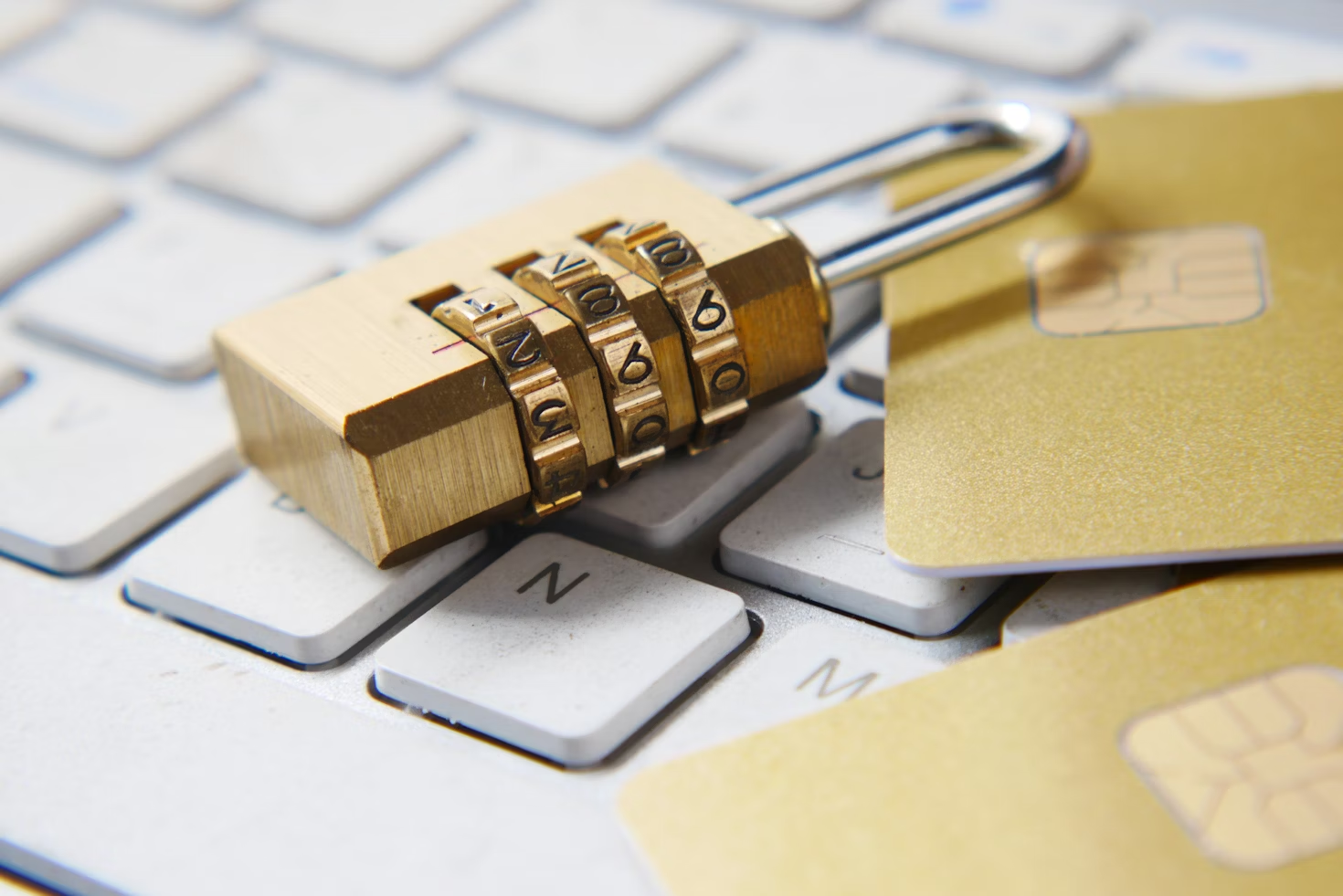
Digital vault vs password manager demonstrates a clear difference in the range of items each tool is designed to store. Password managers focus on login credentials, payment cards, and basic notes. Digital vaults store larger and more sensitive data sets, such as legal documents, family records, identity files, and confidential business materials. The broader storage capability makes vaults suitable for users with diverse protection needs.
Digital vaults also store multimedia files and encrypted backups, features not commonly found in password managers. Users managing high value or long term data benefit directly from this expanded capability. Digital vault vs password manager comparisons highlight how vaults offer a centralized space for secure document management. Password managers remain efficient for fast access to daily logins.
2. Security Architecture and Encryption Strength

Digital vault vs password manager differences are visible in encryption design. Password managers use strong encryption, but vaults often apply enhanced layers such as biometric access, device binding, and hardware backed security modules. The expanded architecture ensures resilience against advanced cyber threats. Vaults typically separate encryption keys from stored data to reduce breach risks.
Password managers rely on speed and user convenience, which impacts how much processing power can be dedicated to encryption. Digital vaults can apply heavier, more computationally intensive security mechanisms because immediate access is not always required. Digital vault vs password manager evaluations commonly show vaults winning in advanced security categories. Users handling classified information prefer vault grade protection.
3. Intended Use Cases

Digital vault vs password manager reveals differing roles in daily operations. A password manager supports quick login access for websites, applications, and devices. It simplifies password hygiene and reduces the need to remember multiple credentials. Users with high digital activity benefit significantly from automation features.
A digital vault is intended for long term storage of documents requiring limited access but maximum security. These include tax records, wills, corporate contracts, identity documents, intellectual property files, and backups. The digital vault vs password manager comparison becomes relevant when deciding whether the stored material is used daily or only when necessary. Vaults offer the controlled environment needed for infrequent yet sensitive data access.
4. Compliance and Regulatory Requirements

Digital vault vs password manager differences are highly relevant in industries such as healthcare, finance, or legal services where regulations are strict. Many vaults support compliance frameworks including GDPR, HIPAA, PCI DSS, and SOC 2. These protections are necessary for organizations that must secure personal or legally binding information. Password managers rarely provide compliance readiness at this level.
Digital vaults often include audit logs, access history, and permission controls needed for regulatory oversight. Businesses must demonstrate accountability when handling sensitive data. Digital vault vs password manager constraints show that password managers rarely offer full compliance reporting features. Vaults suit organizations seeking documented security governance.
5. Access Control and User Permissions

Digital vault vs password manager comparisons highlight major differences in user access control. Password managers typically allow individual accounts or shared vault folders with limited permission settings. These tools prioritize ease of sharing rather than advanced access governance. Households and small teams find this structure efficient.
Digital vaults support complex permission hierarchies with tiered access, encryption sharing, and administrative controls. Enterprises with large teams require flexible access levels to prevent unauthorized visibility. Digital vault vs password manager evaluations show vaults offering more precise control, including role based access and time limited file viewing. These controls improve accountability and collaboration security.
6. Backup, Recovery, and Redundancy

Digital vault vs password manager evaluations reveal differences in disaster recovery capability. Password managers provide basic cloud sync and emergency access features. These are useful but limited when handling large archives of sensitive documents. Vaults prioritize robust backup infrastructures with multiple redundancy layers.
Redundant cloud storage, offline backups, and version history protect users in case of hardware failure or accidental deletion. Digital vault vs password manager analysis consistently shows vaults offering superior recovery tools. Users seeking insurance against data corruption prefer vault grade features.
7. Integration with Broader Security Ecosystems

Digital vault vs password manager differences also appear in platform integration. Password managers integrate with browsers, mobile systems, and autofill engines. These integrations focus on daily efficiency. Their ecosystem connects closely with user authentication environments.
Digital vaults integrate with enterprise identity management, cloud storage, encryption modules, and secure file sharing systems. Their design supports corporate infrastructure and long term archival strategies. Digital vault vs password manager comparisons show vaults delivering deeper interoperability for organizations needing layered digital protection. This integration capability supports scalable cybersecurity strategies.
Conclusion
Digital vault vs password manager comparisons help users understand that both tools serve important yet different security roles. Password managers excel at daily login management and streamline credential handling. Digital vaults provide higher security levels for long term storage of sensitive files, documents, and confidential materials. Users who understand their storage needs can choose a suitable solution based on access frequency, information sensitivity, and regulatory requirements. Digital vault vs password manager decisions play a key role in shaping personal and professional cybersecurity strategies.